Samsung Watch Battery Life Comparison
Galaxy Watches are charged every night or every other night — Samsung builds them around a bright AMOLED screen and a full Wear OS app platform, and the runtime reflects that. What separates the models is which side of the two-day line they land on — and the Watch Ultra, carrying the largest cell in the range, sits furthest past it.
Top 10 Samsung watches by battery life
- 1
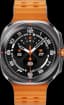 Galaxy Watch Ultra4days
 - 2
 Galaxy Watch5 Pro - 45mm3.5days
 - 3
 Galaxy Watch5 Pro - 45mm · LTE3.5days
 - 4
 Galaxy Watch - 46mm3days
 - 5
 Galaxy Watch - 46mm · Golf Edition3days
 - 6
 Gear Sport3days
 - 7
 Gear S3 Classic - 49.1mm3days
 - 8
 Gear S3 Classic - 49.1mm · LTE3days
 - 9
 Gear S3 Frontier - 49.1mm3days
 - 10
 Gear S3 Frontier - 49.1mm · LTE3days
Samsung battery life, ranked
The extremes of the range on each figure Samsung publishes. Every number below is the manufacturer's own rating, not a measured result.
Longest-lasting Samsung watches
Most days per charge in everyday use
- 1Galaxy Watch Ultra4 days
- 2Galaxy Watch5 Pro - 45mm3.5 days
- 3Galaxy Watch5 Pro - 45mm · LTE3.5 days
- 4Galaxy Watch - 46mm3 days
- 5
Affiliate disclosure: As an Amazon Associate, WatchFitTool earns from qualifying purchases. If you buy through links on this page, we may earn a commission at no extra cost to you. Learn more.
Every Samsung watch, side by side
Sort by everyday runtime, GPS hours, power-save mode or cell size. Figures quoted in days and in hours are normalised to the same scale, so the columns can be ranked against each other.
As an Amazon Associate, WatchFitTool earns from qualifying purchases.
Showing 64 of 64 Samsung models with published battery figures.

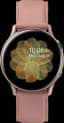
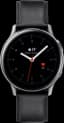
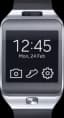
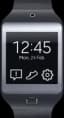




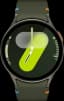






All figures are manufacturer ratings for the model as sold. Brands measure each mode under their own usage profile, so a power-saving figure occasionally falls below the everyday one — that reflects how the two were tested, not a fault in the watch. Real-world runtime depends on the always-on display, workout frequency and how many sensors are left enabled.
What actually drains the battery on Samsung watches
Two models with the same battery can be a week apart in practice. These are the four things that decide which side of the gap a watch lands on.
Wear OS costs runtime, and buys apps
Everything from Gear S3 onwards runs a full app platform with background sync, on-wrist payments and a phone-grade voice assistant. That is the reason a Galaxy Watch is quoted in days where a fitness-first watch is quoted in weeks — the comparison is closer to a phone than to a tracker.
LTE is the single biggest drain
The LTE variants in this table carry the same cell as their Bluetooth twins and are quoted at the same figure, but a watch actually holding a cellular connection loses hours rather than minutes. If you plan to leave the phone behind, read the quoted number as an optimistic ceiling.
Sleep tracking competes with charging
Samsung's health features assume the watch is worn overnight, which removes the obvious window for charging it. In practice, a Galaxy Watch that is genuinely worn 24 hours a day needs a top-up during a shower or a commute — which is what the fast wireless charging is for.
Power saving buys a weekend
Power-saving mode turns the screen greyscale and suspends background apps and connectivity. The figures in that column are what a Galaxy Watch achieves as a watch and step counter, and they are the reason a model quoted at two days can still be useful on a weekend away from the charger.
Samsung battery life FAQ
Which Samsung watch has the longest battery life?
The Galaxy Watch Ultra, at 4 days in everyday use — the highest figure Samsung publishes across the 64 models in our database. The typical Samsung sits at 2 days, so it is a genuine outlier rather than a marginal win.
How long does a Galaxy Watch really last?
With the always-on display enabled, sleep tracking on and notifications arriving through the day, most recent Galaxy Watches finish a full waking day with charge left but do not reliably make it through a second night. Turning the always-on display off is the single change that most often takes a model from one day to two.
Does the 40mm or the 44mm last longer?
The larger case, consistently. Samsung uses the same platform and screen technology across both sizes of a generation, so the bigger model gets a bigger battery driving a proportionally larger screen — and comes out ahead. It is worth checking against your wrist measurement before choosing on runtime alone.
Can a Galaxy Watch charge wirelessly from a phone?
Yes — most recent models support Wireless PowerShare, so a compatible Galaxy phone can charge the watch off its own battery by holding the two together. It is slow compared with the magnetic puck, but it is what makes a one-day watch workable on a trip where you forgot the charger.
Which Samsung watch lasts longest with GPS on?
The Galaxy Watch 4 Classic - LTE · 42mm, rated for 10 hours of continuous tracking. GPS runtime is quoted separately from everyday runtime and the two rank differently, so a model that leads on days per charge is not automatically the one to take to a long event.
Does a bigger battery mean a longer-lasting Samsung watch?
Not on its own. The Galaxy Watch Ultra has the largest cell in the range at 590 mAh, but screen technology and how much the watch does in the background matter at least as much — which is why models with smaller batteries can outlast it. Sort the table by capacity and then by everyday use to see how loosely the two track each other.
Why Galaxy Watch runtimes look short
Samsung is not competing with multi-week fitness watches; it is competing with the Apple Watch, and it has made the same trade — a bright, high-resolution AMOLED screen, a real app platform, on-device payments and a voice assistant, all of which cost power. Read the figures as "how many nights between charges" rather than as a weakness against watches that do far less.
The practical consequence is that the choice within the range is rarely about runtime alone: almost every model needs charging every day or two, so the case size that fits your wrist and the features you will use matter more than a few hours either way.
Older Gear models in this table
The Gear S2, S3 and Sport models ran Tizen rather than Wear OS, and several of them post better figures than the Galaxy Watches that replaced them. That is a genuine difference — Tizen was lighter, and those watches did less — rather than a data error.
They are included because they are still in circulation and still bought second-hand, but bear in mind that a battery from 2016 will not hold what its spec sheet promised when new.