Apple Watch Battery Life Comparison
Apple quotes 18 hours and means it: the Apple Watch is the only major line designed around a daily charge rather than a multi-day one. What separates the models here is therefore not days but whether a watch clears a day comfortably, survives a night of sleep tracking on top of it, or — in the Ultra's case — genuinely goes away for a weekend.
Top 10 Apple watches by battery life
- 1
 Watch Series 2 - 38mm2days
- 2
 Watch Series 2 - 38mm · Edition2days
- 3
 Watch Series 2 - 42mm2days
- 4
 Watch Series 2 - 42mm · Edition2days
- 5
 Watch Ultra 342hours
- 6
 Watch Ultra 236hours
- 7
 Watch Ultra36hours
- 8
 Watch Series 11 - GPS + Cellular · Aluminium · 42mm24hours
- 9
 Watch Series 11 - GPS + Cellular · Aluminium · 46mm24hours
- 10
 Watch Series 11 - GPS + Cellular · Titanium · 42mm24hours
Apple battery life, ranked
The extremes of the range on each figure Apple publishes. Every number below is the manufacturer's own rating, not a measured result.
Longest-lasting Apple watches
Most days per charge in everyday use
- 1Watch Series 2 - 38mm2 days
- 2
- 3Watch Series 2 - 42mm2 days
- 4
- 5Watch Ultra 342 hours
Longest Apple watches in power-save mode
How far a charge stretches with features stripped back
- 1Watch Ultra 33 days
- 2Watch Ultra 23 days
- 3
 Watch SE (2022) - 44mm2.1 days
- 4
- 5
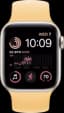 Watch SE (2022) - GPS · 40mm2.1 days
Affiliate disclosure: As an Amazon Associate, WatchFitTool earns from qualifying purchases. If you buy through links on this page, we may earn a commission at no extra cost to you. Learn more.
Already own one and it is draining faster than this? Check whether your Apple's battery is behaving normally — what Apple publishes about ageing, every firmware drain we know of, and what a replacement involves.
Every Apple watch, side by side
Sort by everyday runtime, GPS hours, power-save mode or cell size. Figures quoted in days and in hours are normalised to the same scale, so the columns can be ranked against each other.
As an Amazon Associate, WatchFitTool earns from qualifying purchases.
Showing 77 of 77 Apple models with published battery figures.
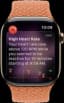

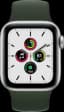


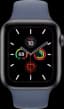
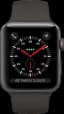
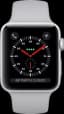
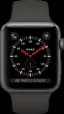
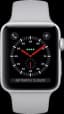
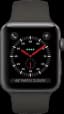
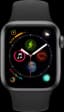
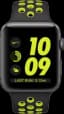
All figures are manufacturer ratings for the model as sold. Brands measure each mode under their own usage profile, so a power-saving figure occasionally falls below the everyday one — that reflects how the two were tested, not a fault in the watch. Real-world runtime depends on the always-on display, workout frequency and how many sensors are left enabled.
What actually drains the battery on Apple watches
Two models with the same battery can be a week apart in practice. These are the four things that decide which side of the gap a watch lands on.
Apple is the only brand that lets you check the battery
Settings → Battery → Battery Health on the watch shows maximum capacity as a percentage of original, and Apple designs the cell to retain up to 80% at 1000 complete charge cycles — roughly two and a half to three years at one charge a day. Below 80% is Apple's own service threshold. Every other brand in this catalogue publishes no figure and gives owners nothing to read, which makes an Apple the easiest watch here to judge honestly.
Eighteen hours is a design decision, not a shortfall
The figure has barely moved across ten generations because Apple spends the gains on the screen, the sensors and the processor instead. Reading it against a watch quoted in weeks compares two different products: one is a small computer, the other is a watch that also counts steps.
Low Power Mode is where the long figures come from
Low Power Mode drops the always-on display, background heart-rate readings and some workout sensors, and roughly doubles what the watch manages. The longer figures in this table are that mode, not ordinary use — which is why two numbers for the same watch can look so far apart.
Cellular is the most expensive feature on the wrist
A GPS-only and a cellular model of the same generation carry the same published figure, but a watch actually holding a cellular connection away from its phone loses hours rather than minutes. If leaving the phone behind is the reason you bought it, treat the quoted number as a ceiling.
Apple battery life FAQ
Which Apple watch has the longest battery life?
The Watch Series 2 - 38mm, at 2 days in everyday use — the highest figure Apple publishes across the 77 models in our database. The typical Apple sits at 18 hours, so it is a genuine outlier rather than a marginal win.
How long should an Apple Watch battery last before it needs replacing?
Apple designs the battery to keep up to 80% of its original capacity at 1000 complete charge cycles, which at one charge a day is about two and a half to three years. Below 80% is where Apple's own policy changes: free service under AppleCare+, $99 without it in the US. You can read the figure yourself in Settings → Battery → Battery Health rather than guessing from how the watch feels.
Why does my Apple Watch not last the 18 hours Apple quotes?
The 18-hour figure assumes a specific mix of checks, notifications and a short workout. Three things take it apart faster than anything else: the always-on display, built-in GPS during workouts, and a cellular connection held without the phone nearby. Each is worth testing on its own before concluding anything about the battery.
Which Apple Watch lasts longest?
The Ultra line, by a wide margin — it carries the largest cell Apple puts in a watch and is quoted at roughly double the standard figure, with Low Power Mode extending it further still. Within the standard line the larger case of a generation lasts longer than the smaller one, as it does on almost every brand.
Does sleep tracking leave any time to charge?
That is the practical problem with a watch designed around a daily charge: wearing it overnight removes the obvious charging window. Most owners who track sleep end up charging during a shower or a commute instead, which fast charging on the newer models is built for.
Which Apple watch lasts longest with GPS on?
The Watch Series 3 - 42mm, rated for 18 hours of continuous tracking. GPS runtime is quoted separately from everyday runtime and the two rank differently, so a model that leads on days per charge is not automatically the one to take to a long event.
Does a bigger battery mean a longer-lasting Apple watch?
Not on its own. The Watch Ultra 2 has the largest cell in the range at 564 mAh, but screen technology and how much the watch does in the background matter at least as much — which is why models with smaller batteries can outlast it. Sort the table by capacity and then by everyday use to see how loosely the two track each other.
Why Apple Watch figures look short next to everything else
Apple decided early that a watch should be charged like a phone, and has spent every generation's efficiency gains on a brighter screen, more sensors and a faster processor rather than on days between charges. The result is a line that has quoted roughly 18 hours for a decade while becoming a far more capable device — so the figure is a product decision rather than a weakness, and comparing it with a fitness watch quoted in weeks compares two different things.
What matters within the range is therefore not which model lasts longest in the abstract, but whether it clears the day you actually have: a desk day with a short workout is a different load from a cellular run with music, and Low Power Mode sits between them.
The one battery figure you can check yourself
Apple is alone here in publishing a capacity threshold and in showing you where your own watch sits against it. Settings → Battery → Battery Health gives a percentage of original capacity; Apple's design target is 80% at 1000 cycles, and below 80% is the point at which it treats the battery as a service case rather than a tired one.
That makes an Apple Watch the one device in this catalogue where "is my battery normal" has a factual answer rather than an inference. On every other brand the only honest method is comparing what you get against what the maker rated the model for — which is what our battery check does, and why it exists.